All-Aboard Time vs Departure Time: What Every Cruiser Needs to Know
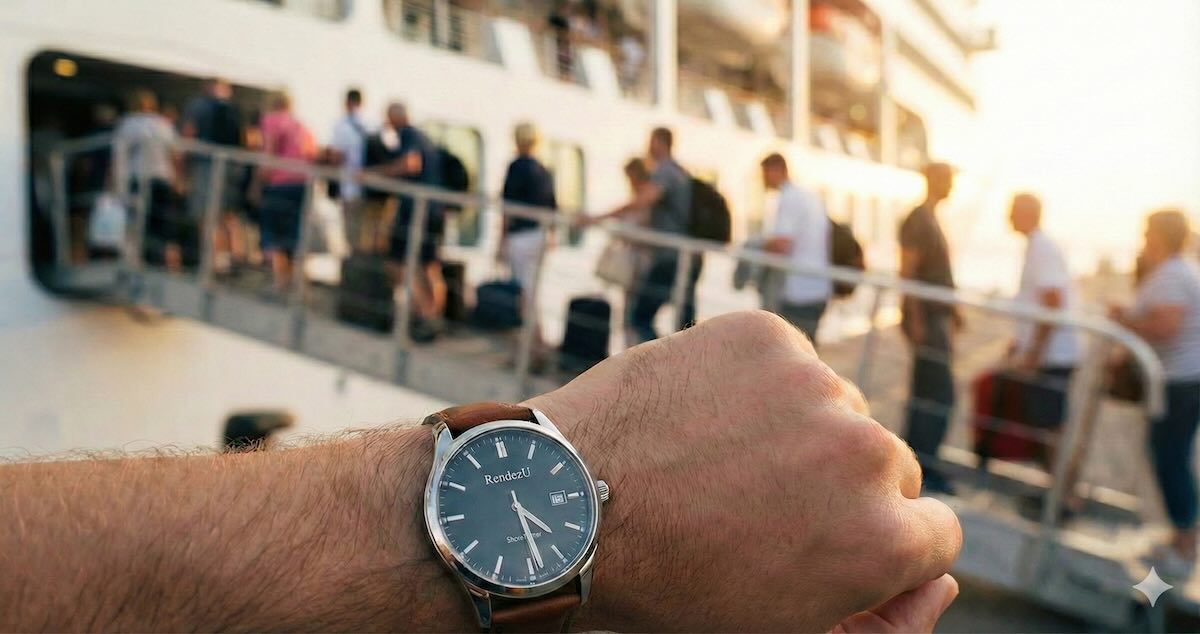
One of the most common mistakes new cruisers make is confusing "All-Aboard Time" with "Departure Time." While they sound similar, mixing them up could mean watching your ship sail away without you. Let's clear up the confusion once and for all.
What Is Departure Time?
Departure Time is when the ship is scheduled to leave the port. This is the time you'll see listed in the cruise itinerary and port schedules. For example, if your ship departs at 5:00 PM, that means the ship will be pulling away from the dock at (or around) 5:00 PM.
What Is All-Aboard Time?
All-Aboard Time is the deadline by which all passengers must be back on the ship. This is typically 30 minutes before departure time, though some cruise lines set it even earlier.
Using our example: if departure is at 5:00 PM, All-Aboard might be 4:30 PM.
Why the Difference Matters
Here's the critical point: the ship will not wait for you past All-Aboard time.
Cruise ships operate on tight schedules. They need time to:
- Account for all passengers
- Complete security checks
- Prepare for departure
- Meet their next port's arrival schedule
If you're not on board by All-Aboard time, you'll be marked as "missing" and the ship will depart without you.
Common Scenarios That Catch People Off Guard
Scenario 1: The Timezone Trap
Your ship operates on Eastern Time, but you're visiting a port in Central Time. You check your watch showing 4:00 PM local time and think you have plenty of time for a 5:00 PM departure.
The problem: The ship runs on Eastern Time, where it's actually 5:00 PM. You're already late.
Always confirm whether times in your itinerary are in ship time or local time. When in doubt, assume it's ship time.
Scenario 2: The Excursion Miscalculation
Your independent tour is scheduled to end at 4:00 PM. With a 5:00 PM departure, you figure you have an hour to spare.
The problem:
- All-Aboard is actually 4:30 PM
- The tour returns you to the city center, not the cruise terminal
- You need 20 minutes to get back to the ship
- You're cutting it dangerously close
Scenario 3: The "I'll Just Be Quick" Shop
At 4:15 PM, you spot a souvenir shop right by the port entrance. "I'll just pop in for 5 minutes," you think.
The problem: The shop is further from the gangway than you realized. There's a security line. Those 5 minutes became 20, and now you're running.
Best Practices for Port Days
1. Always Target All-Aboard, Not Departure
Set your return time for All-Aboard, then add a buffer. If All-Aboard is 4:30 PM, plan to be back by 4:00 PM at the latest.
2. Sync Your Watch to Ship Time
At the start of each port day, confirm your device shows ship time. Many cruisers wear a simple watch set permanently to ship time as a backup.
3. Know the Terminal Location
The cruise terminal might not be in the center of town. Research the walking or taxi time from popular areas back to the ship.
4. Account for Security
You'll need to go through security screening to re-board. During busy return times, this can take 10-15 minutes.
5. Have a "Leave By" Time
Calculate what time you need to leave your furthest point to make it back comfortably. Then stick to it.
What If You're Running Late?
If you realize you might not make All-Aboard time:
- Call the ship immediately - Guest services can alert the gangway staff
- Take the fastest transport available - This isn't the time to save money on a taxi
- Don't stop for anything - That souvenir can wait
- Run if you have to - Seriously
The crew at the gangway will often watch for late passengers up until the very last moment, but they cannot delay departure.
Ship-Sponsored Excursions: A Safety Net
One advantage of booking excursions through the cruise line: if the ship's excursion runs late, the ship will wait for those passengers. This guarantee doesn't apply to independent tours or solo exploration.
That said, don't let this make you complacent on ship excursions. The tour operator will try hard to return on time, and sitting on a bus rushing through traffic isn't fun for anyone.
Using Technology to Stay Safe
Modern apps can take the guesswork out of port day timing. ShoreTimer, for example, shows:
- A live countdown to your All-Aboard time
- Your current distance from the ship
- Estimated travel time back to the port
- Smart alerts that adjust based on your location
This means you're never calculating times in your head or guessing about distances. You always know exactly where you stand.
Key Takeaways
- All-Aboard Time ≠ Departure Time - Usually 30 minutes earlier
- Ship time might differ from local time - Always verify
- Build in buffers - Account for security, walking, and the unexpected
- Have a "leave by" time for your furthest point
- Use technology to track your time and distance
Understanding this simple difference can be the key to stress-free port days. Now get out there and explore!
Never Miss Your Ship
Download ShoreTimer and explore every port with confidence.